 Arpit
ArpitIf you have ever looked at a plain denim jacket or a corporate polo and felt it was missing “soul,” you’ve likely considered a custom patch. But here is the thing: not all patches are created equal. As we move through 2026, the industry has shifted away from cheap, mass-produced “stickers” toward high-texture, durable art pieces that actually tell a story.
At Dream Embroidery, we see patches as more than just accessories—they are the bridge between your brand’s identity and the physical world. Whether you’re a local business owner in India looking to professionalize your team or a fashion enthusiast DIY-ing a new collection, this guide breaks down the “why” and “how” of modern patch making.
Why Patches are Dominating Fashion in 2026
We are seeing a massive trend toward individuality. People are tired of fast fashion that looks the same on everyone. Custom patches offer a sustainable way to upcycle old clothes, turning a standard thrift-store find into a high-end statement piece.
Beyond fashion, businesses are realizing that patches offer better ROI than direct printing. You can buy 500 patches, keep them in a drawer, and apply them to hats, bags, or jackets only when you need them. It’s smart, scalable branding.
Choosing Your Weapon: The Main Types of Patches
Choosing the right style is the difference between a “cool” patch and one that looks like a budget mistake.
- The Classic: Embroidered Patches
This is the gold standard. We use high-speed machines to stitch your design onto a backing. In 2026, 3D “Puff” Embroidery is a huge hit—it literally jumps off the fabric, giving your logo a heavy, premium feel.
- Best for: Logos with 1–6 colors and bold lines.
- The Detailed: Woven Patches
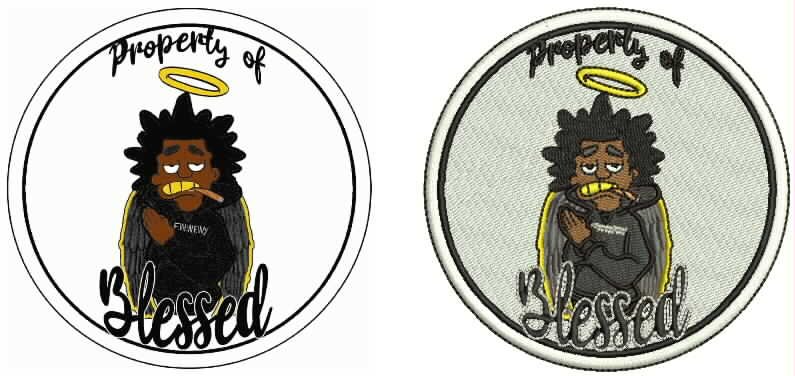
If your logo has tiny text or very fine lines, embroidery might look “chunky.” Woven patches use much thinner threads and a tighter weave. They are flat, smooth, and can capture incredible detail that a needle and thread simply can’t reach.
- Best for: Intricate artwork or small “property of” labels.
- The Vintage: Chenille Patches
You know that fuzzy, carpet-like feel on old school varsity jackets? That’s Chenille. It’s making a massive comeback in streetwear. It adds a soft, tactile dimension that people can’t help but touch.
- Best for: Large letters, numbers, and simple shapes.
- The Rugged: PVC Patches
For outdoor gear, tactical vests, or rain jackets, thread isn’t always the best choice. PVC (rubber) patches are waterproof, impossible to fray, and can be molded into 2D or 3D designs.
- Best for: Adventure brands and heavy-duty workwear.
The Secret Sauce: Which Backing is Right?
Most people forget about the backing until the patch arrives. Don’t be that person.
- Sew-On (No Backing): The most flexible and durable. If you want the patch to last 10 years and survive 100 washes, sew it on.
- Iron-On (Heat Seal): Perfect for DIY. You just need a heat press or a household iron. Pro Tip: Don’t use iron-ons on synthetic fabrics like nylon; they’ll melt!
- Velcro (Hook & Loop): Essential for uniforms. You can swap your “Manager” patch for a “Staff” patch in two seconds.
- Adhesive (Sticky): Treat these like stickers. Great for a one-day event or a trade show, but they will fall off in the laundry.
Frequently Asked Questions (The Real Stuff)
Q: How do I know if my logo will look good as a patch? Usually, the simpler the better. If your logo has 20 different colors and tiny gradients, we might suggest a Printed Patch or a Woven style. Always aim for high contrast so your design “pops” from a distance.
Q: Will the colors fade over time? Not if you use high-quality polyester threads. Polyester is bleach-resistant and holds its color even in the sun. At Dream Embroidery, we use threads designed to survive the Indian climate—from high heat to humidity.
Q: Can I apply a patch to a hat myself? Hats are tricky because of the curve. While you can iron them on, we always recommend a professional hat press or a simple “running stitch” around the edges to make sure the corners don’t peel up.
Q: What is “digitizing” and why do I have to pay for it? Think of digitizing as “translating.” We have to turn your JPG or PNG image into a map of thousands of individual stitches. It’s a manual process done by a specialist to ensure the machine doesn’t “birdnest” or ruin your garment.
Q: How long does it actually take? Most custom orders take 10–14 days. This includes the design phase, the “sample stitch-out” (where we show you a photo of the first physical patch), and the final production run.
If you’re ready to see your design in thread, reach out to us at Dream Embroidery. We don’t just “hit go” on a machine; we treat every stitch like a piece of art.